
Customer Service Hotline:
+8613261677119
+8613261677119
Fire Alarm Management Software for System Integrators | Wanlin Fire · Practical Product and Application Information
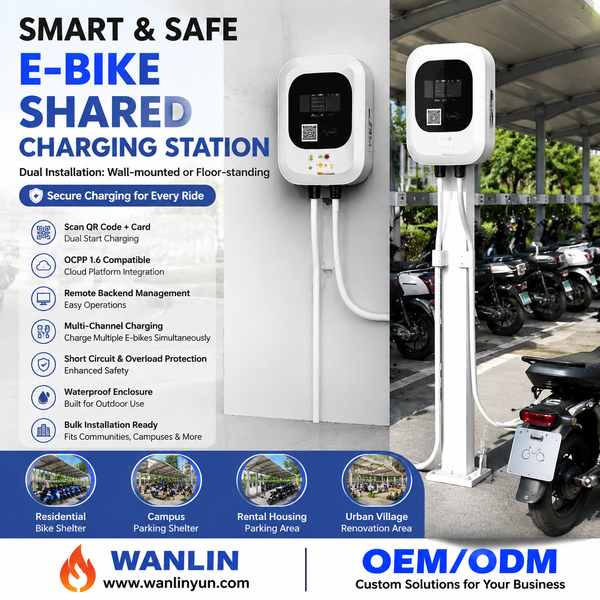
Wanlin - China source manufacturer for Indonesia PLN compliant EV charger. Featured model WL-SC20 (20-Socket Centralized Charging Station): 20 ports, 24kW total on 3-phase, dynamic load distribution; DC 48V/60V/72V/96V group-configurable, CC-CV; QR + RFID + app + centralized operator billing; OCPP 1.6J, group management; Steel, IP54 (indoor) / IP65 (outdoor canopy). Full lineup: single-socket home chargers, dual-socket destination chargers, 4/6/8-socket community and street hubs, 7kW three-wheel
Review relevant products, system options, application guidance, project support, and pre-sales or after-sales services.
Compare the application scenario, functional requirements, installation environment, interfaces, communication method, quantity, and project schedule.
Confirm model numbers, technical parameters, certifications, delivery terms, and compatibility against current product documents and agreed project requirements.
Wanlin - China source manufacturer for Indonesia PLN compliant EV charger. Featured model WL-SC20 (20-Socket Centralized Charging Station): 20 ports, 24kW total on 3-phase, dynamic load distribution; DC 48V/60V/72V/96V group-configurable, CC-CV; QR + RFID + app + centralized operator billing; OCPP 1.6J, group management; Steel, IP54 (indoor) / IP65 (outdoor canopy). Full lineup: single-socket home chargers, dual-socket destination chargers, 4/6/8-socket community and street hubs, 7kW three-wheel
Use the published product information to shortlist a model, then verify the current datasheet, protocol, power supply, certificate scope and destination requirements before specifying or purchasing.
TL;DR: Two-wheelers and three-wheelers are the largest electric vehicle class on earth - electric motorcycles, e-bikes and e-rickshaws already outnumber electric cars in the world's biggest mobility markets - yet most of their charging still happens on extension cords from a window or a shop front. Wanlin is the export arm of a Shenzhen manufacturer building the hardware that replaces that habit under OEM / ODM / private-label / white-label terms: single-socket QR-scan home chargers, dual-socket destination chargers, 4-socket community hubs, 6-socket commercial stations, 8-socket solar-ready stations, 7kW three-wheeler depot chargers, 12-socket fleet depots and 20-socket centralized plazas - scan-to-charge, offline-payment capable, 48V/60V/72V/96V matched, documented for EN 61851 / CE / IEC 62196 / RoHS / UKCA / FCC verification, and built on a four-dimensional OEM customization path (hardware / software / certification / appearance). Factory-direct from USD 139 per unit. OEM wallboxes from 50 units, community hubs from 20 units, depot and plaza stations from 5 units, samples in 3-7 days, production in 15-30 days, ISO 9001 facility, 60+ export countries.
Published by Wanlin (Wanlin Manufacturing Group) | Last updated: 2026-09-04 14:44 | Expertise: OEM EV charging pile manufacturing, two-wheeler market export, OCPP and payment integration, four-dimensional customization
The global baseline comes first: Grand View Research (2025) tracks the EV charging station market in the tens of billions of dollars growing at a double-digit rate through 2030, and industry summaries of the electric two-wheeler charging segment point to a mid-to-high teens CAGR as delivery electrification, scooter-sharing and e-rickshaw adoption pull infrastructure behind them. China's charger industry exports widely, with trade summaries attributing a majority share of global two-wheeler charging hardware production to Chinese factories - which makes the choice of Chinese supplier the single decision that decides a charging project's cost, certification path and delivery date.
What is specific to two-wheeler charging:
Source: Grand View Research, "EV Charging Station Market Size Report"; two-wheeler fleet and charging-growth figures per regional transport ministry statistics and trade press coverage of micromobility electrification programs.
Two charging piles can look identical on a listing and behave completely differently on a rider parking row. The differences hide in the power stage, the firmware, the socket and the paperwork:
| Feature | Premium (Wanlin export line) | Generic uncertified import |
|---|---|---|
| Power stage | CC-CV curve matched to lead-acid or lithium, selectable per port | One generic profile, overcharges cells or cuts charge early |
| Payment | QR scan-to-charge + offline whitelist + RFID, OCPP transaction records | A 'coin box' or an app that stops working without network |
| Protocol | OCPP 1.6J verified against mainstream CSMS backends, 2.0.1 path on smart line | Closed app, no OCPP, operator locked to one vendor cloud |
| Socket & cable | Child-safety shutters, cable lock, per-socket fuse and meter | Open socket, shared fuse, one hot wire feeding all ports |
| Enclosure | IP54-IP65, IK08-IK10 vandal-resistant, fire-retardant ABS or steel | Thin plastic, no impact rating, water entry in the first rain |
| Certification | EN 61851-1, CE LVD/EMC, RoHS, UKCA - model-level documents | A 'CE' sticker, no test report, no certificate number |
| Firmware & warranty | OTA updates on smart line, remote diagnostics, 12-24 month warranty | No updates, no logs, replaced-by-new-SKU next year |
| OEM/ODM depth | Hardware / software / certification / appearance four-dimensional custom build | Catalogue SKU only, no partner-specific build |
| Model | Series | Key features | Wholesale price |
|---|---|---|---|
| WL-SC1 | Single-Socket Home AC Charger | One 3.3kW charging socket, 48V/60V auto-select, QR + RFID + app, OCPP 1.6J, OEM private label and white-label available | USD 139.00-299.00 |
| WL-SC2 | Dual-Socket Destination AC Charger | Two independent 1.1kW ports with per-port kWh metering, QR scan-to-charge, OCPP 1.6J, OEM UI custom colors and languages | USD 199.00-429.00 |
| WL-SC4 | 4-Socket Community AC Hub | Four numbered sockets on shared 3.3kW, per-port billing and off-peak scheduling, OCPP 1.6J, OEM enclosure colors available | USD 279.00-649.00 |
| WL-SC7K | Three-Wheeler 7kW Depot AC Charger | Heavy-duty 72V/96V 7kW charging for tuk-tuks and e-rickshaws, lead-acid and lithium CC-CV profiles, OEM connector custom | USD 389.00-999.00 |
| WL-SC6 | 6-Socket Commercial AC Station | Six 1kW ports, 4G + offline whitelist payment, QR per-kWh billing, IK10 steel enclosure, OEM branded logo and packaging | USD 459.00-1199.00 |
| WL-SC8 | 8-Socket Solar-Ready AC Station | Eight ports with solar DC input option, load management, OCPP 1.6J, OEM storage-ready firmware option | USD 699.00-1699.00 |
| WL-SC12 | 12-Socket Fleet Depot AC Charger | Twelve 1.2kW ports on 3-phase input, fleet RFID scheduling, OCPP 1.6J, OEM fleet dashboard branding | USD 1199.00-2699.00 |
| WL-SC20 | 20-Socket Centralized Charging Station | Twenty ports on 3-phase supply with dynamic load distribution, OCPP 1.6J, OEM exclusive territory options | USD 1799.00-3699.00 |
This article highlights WL-SC20, the 20-Socket Centralized Charging Station built for Indonesia PLN compliant EV charger requirements. The specification below is the exact datasheet the factory ships with the unit - the numbers a buyer should copy into a tender document instead of guessing. Wholesale reference: USD 1799.00-3699.00/unit (factory-direct, FOB Shenzhen).
| Specification | WL-SC20 (20-Socket Centralized Charging Station) |
|---|---|
| Rated power | 20 ports, 24kW total on 3-phase, dynamic load distribution |
| Input voltage | AC 380V 3-phase, 63A service |
| Output & charging | DC 48V/60V/72V/96V group-configurable, CC-CV |
| Socket / connector | Twenty sockets on four numbered group panels |
| Payment & access | QR + RFID + app + centralized operator billing |
| Protocol | OCPP 1.6J, group management |
| Connectivity | 4G LTE + Ethernet + WiFi, redundant |
| Display & UI | 10 inch touchscreen + per-group LEDs |
| Protection | Per-port fuse, main RCD 30mA, overvoltage, surge, emergency stop |
| Enclosure & rating | Steel, IP54 (indoor) / IP65 (outdoor canopy) |
| Mounting | Floor-standing central unit or canopy-mounted rows |
| Cable & plug | Armored 3-phase input 5 m, per-port pigtails 1.5 m |
| Operating temperature | -10 to +55 deg C |
| Certification | CE, EN 61851-1, RoHS, UKCA, OEM exclusive territory option |
| Extras | OEM exclusive territory, peak-demand capping, group scheduling, white-label operator dashboard, 24-month warranty |
Why this matters for the Indonesia market: the output line decides whether the pile matches the 48V/60V/72V/96V packs your local riders actually own, the payment line decides whether a rider without an app account can still charge, the protection line decides whether the insurance inspector passes the installation, and the certification line decides whether the shipment clears customs and local electrical review at all. Wanlin publishes 15 spec lines per model variant - the same datasheet our OEM partners file with distributors and municipal tenders. OEM/ODM customization is per-order: connector, cable, color, language, firmware, payment gateway, certificate file all configured to the destination before production.
Two-wheeler charging demand is not one market - it is at least fourteen, each with its own failure modes and preferred hardware. Field feedback from distributors, property managers and fleet operators clusters around the scenarios below.
Who uses it: OEM partners building a customer-facing charging app under their own brand. How it is used: a charging network is judged by the app the rider sees on a hot day, not the cabinet on the wall. The WL-SC6 OEM firmware ships with a white-label app shell: the partner drops its logo, color scheme and tariff tier into the build, the rider's wallet screens re-skin under the partner's brand, and the operator dashboard re-skins the same - so the partner owns the customer relationship instead of explaining to a fleet buyer why the charger is labeled Wanlin when the buyer paid for their own brand.
Field numbers: in this deployment class the WL-SC20 runs on 20 ports, 24kW total on 3-phase, dynamic load distribution with DC 48V/60V/72V/96V group-configurable, CC-CV, paid through QR + RFID + app + centralized operator billing, and the Steel, IP54 (indoor) / IP65 (outdoor canopy) enclosure with -10 to +55 deg C rating is engineered for exactly this site. Operators report that utilization in this scenario spikes at shift changes and after 18:00 as riders top up on the way home.
Who uses it: factory owners and industrial park operators. How it is used: a 10,000-worker factory parks thousands of electric motorcycles under one roof at 07:30 and expects them charged by 17:30. A PV carport feeds WL-SC8 stations through the solar DC input: morning arrivals start on battery-stored energy, the noon solar peak tops up the midday shift, and the load manager caps total draw so the factory never upgrades its transformer for charging alone - the carport sells its surplus back to the grid on weekends instead of idling.
Field numbers: this scenario favors the WL-SC20 management path - OCPP 1.6J, group management with 4G LTE + Ethernet + WiFi, redundant - because a fleet manager or property operator has to see live port state, per-session kWh and fault alarms without walking the row, and the 10 inch touchscreen + per-group LEDs tells a rider or technician exactly which socket is available.
| Market | Channel | Model | Units | Outcome |
|---|---|---|---|---|
| Brazil | Sao Paulo factory parking operator | WL-SC8 | 40 units | PV carport stations charged the morning arrival wave on stored solar and never drew more than 60% of the factory's spare transformer capacity |
| Vietnam | Ho Chi Minh City OEM connector spec | WL-SC7K | 32 rows | OEM Vietnamese round-pin connector spec cut adapter cost to zero and the partner's service truck carried one fewer SKU per route |
| Cambodia | Phnom Penh OEM white-label app | WL-SC6 | 11 stations | OEM white-label app re-skinned in Khmer and English let the partner own the rider relationship while sharing Wanlin's OCPP backend |
Reading the pattern: two-wheeler charging procurement runs on fleet and property calendars - delivery platform expansions, condo annual maintenance budgets, municipal electrification tenders and pre-monsoon installation windows in the tropics. Buyers who booked factory capacity against that calendar took the margin; buyers who chased stock mid-season paid air freight. That is the rhythm Wanlin builds production planning around, with 15-30 day lead times and reserved capacity for committed partners.
The OEM path is what separates a Chinese factory from a private-label partner. Wanlin configures every OEM order across four dimensions before production starts:
| Dimension | What Wanlin customizes | Typical lead time added |
|---|---|---|
| Hardware customization | Connector type (GB/T / Type 2 / J1772 / Anderson SB / regional round-pin), cable length, enclosure color (Pantone match), silk-screen brand mark, packaging, user-manual language, accessory kit | 3-7 days sample, 15-30 days production |
| Software customization | White-label operator app, white-label rider app, custom UI strings, custom tariff logic, payment-gateway SDK (GrabPay / GCash / Maya / OVO / GoPay / MoMo / ZaloPay / TrueMoney / Touch'nGo), custom OCPP CSMS handshake | 10-14 days per SDK integration |
| Certification file build | CE / EN 61851 / IEC 62196 / RoHS / FCC / UKCA / TIS / SNI / ST / SIRIM / PEA / MEA / TNB / Meralco documents prepared for the specific destination; sample units for testing, technical files for the application | 2-3 weeks per jurisdiction |
| Appearance customization | Private mold, exclusive color, custom logo placement, custom serial number scheme, custom gift-box packaging, silk-screen operator mark on enclosure | 4 weeks Pantone tooling; 6-10 weeks private-mold tooling |
Sample policy: sample kits and engineering samples ship in 3-7 days from order confirmation; the partner signs off the sample before production starts. Sample cost is refundable against the first production order above the model MOQ. Partner who booked capacity for a delivery-fleet season or a municipal tender window gets production slots reserved in advance.
The WL-SC firmware implements the OCPP 1.6J message set as standard, and the implementation depth is what backend integrators audit first. Message-by-message coverage:
Southeast-Asia country grid and certification specifics: the WL-SC input stage accepts 220-240V 50/60Hz single-phase or 380V three-phase (selected per order), covering Thailand PEA / MEA at 220V 50Hz, Vietnam EVN at 220V 50Hz, Indonesia PLN at 230V 50Hz, Malaysia TNB at 240V 50Hz, and Philippines Meralco at 220V 60Hz. Certification packages are built per destination - TIS 61851 plus PEA / MEA importer registration for Thailand, EVN compliance for Vietnam, SNI plus SDPPI for Indonesia, ST plus SIRIM for Malaysia, Meralco plus ICC for the Philippines - and the file travels with the goods. ASEAN Open Charging Framework (AOCF) integration path is wired into the firmware for cross-border roaming at hubs near border crossings.
| Advantage | Details |
|---|---|
| True manufacturing | Own production and assembly lines in Shenzhen: power-stage assembly, socket and enclosure fitting, 100% functional and insulation testing on every unit before packing. Nothing is outsourced, and buyers can audit the lines before ordering. |
| Full-stack product range | Single-socket home chargers, dual-socket destination chargers, 4-socket community hubs, 6-socket commercial stations, 8-socket solar-ready stations, 7kW three-wheeler depot chargers, 12-socket fleet depots and 20-socket centralized plazas - one supplier, one technical file, one shipment instead of five vendors that do not talk to each other. |
| OCPP and payment depth | OCPP 1.6J verified against mainstream CSMS backends with a 2.0.1 upgrade path on the smart line; QR scan-to-charge, offline whitelist, RFID and app rails; payment-gateway SDK plugin (GrabPay / GCash / Maya / OVO / GoPay / MoMo / ZaloPay / TrueMoney / Touch'nGo); operator tariff tools per socket - the firmware layer distributors and fleet operators actually get asked about. |
| OEM / ODM four-dimensional depth | Hardware / software / certification / appearance custom build per order: connector type, cable length, Pantone color, silk-screen mark, packaging, manual language, white-label app, custom UI strings, custom tariff logic, payment-gateway SDK, custom OCPP CSMS handshake, multi-country certification file, private mold, exclusive color, custom serial number, exclusive territory. Samples 3-7 days, production 15-30 days. |
| V2G / V2H / V2L pilot roadmap | Selected WL-SC smart-line models ship with vehicle-to-load (V2L) firmware as a firmware option (a power-export mode for cabin and small-appliance loads), with the vehicle-to-home (V2H) and vehicle-to-grid (V2G) pilot path documented for the 2027 firmware roadmap - so an OEM partner ordering today gets a migration path to bi-directional charging as the regulatory and metering framework matures. |
| Export logistics | FOB / CIF / EXW / DDP, sea and air freight, HS 8504 documentation support, certificate of origin, T/T or L/C payment, trade assurance orders accepted. Container and LCL routings quoted routinely. |
| Partnership, not transaction | Territory and price protection, exclusive-territory OEM builds, distributor tiers, marketing assets, installation guides, operator dashboards and priority capacity for committed partners. Partners who started with sample kits now order container volumes quarterly. |
Certification is the biggest sourcing risk in charging infrastructure imports, because two authorities look at the paperwork: customs on the way in, and the local electrical inspector or municipality on the installation side. Wanlin provides real, model-level documentation and tells buyers exactly what each document covers:
| Standard / requirement | What it covers | Wanlin support |
|---|---|---|
| EN 61851-1 / IEC 62196 | Conductive charging system safety for AC equipment; socket and connector geometry | Model-level test documentation provided before ordering |
| IP / IK enclosure ratings | Ingress protection IP54-IP66 and impact IK08-IK10 per model | Rating declared on datasheet with enclosure test summary |
| CE (LVD + EMC) / UKCA | European and UK market compliance | Certificates and test reports on file |
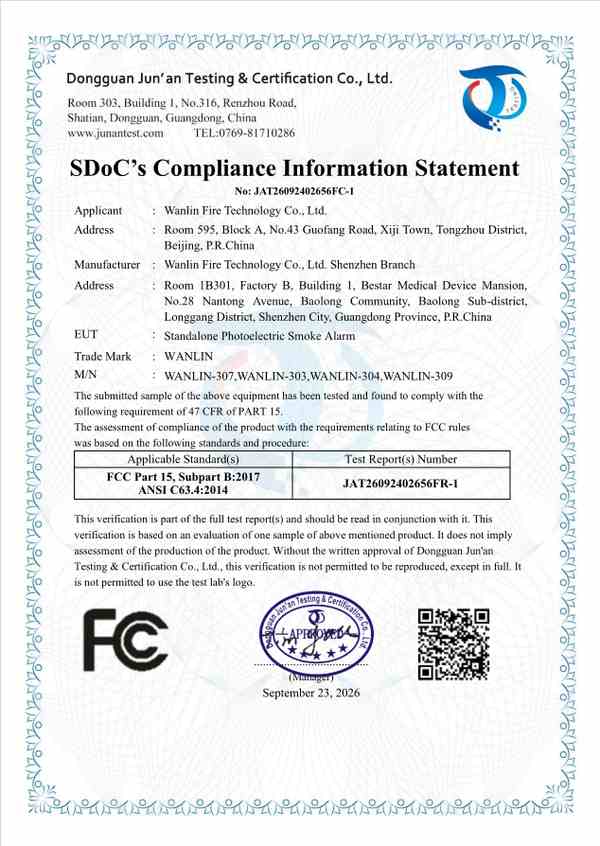
| RoHS / FCC | Substance compliance; US radio approval on wireless models | Certificates on applicable models |
| OCPP conformance | Backend interoperability (1.6J standard, 2.0.1 path) | Handshake verification against your CSMS before shipping |
| Country grid / certification | Thailand TIS / PEA / MEA, Vietnam EVN, Indonesia SNI / SDPPI, Malaysia TNB / ST / SIRIM, Philippines Meralco / ICC | Module compliance documents, application-file support per jurisdiction |
| Local type approval | Radio modules in 4G kiosks / cabinets per destination market | Module compliance documents, application-file support |
Import guidance: charging piles typically classify under HS heading 8504 (8504.40 static converters / battery chargers) - confirm the exact code and duty rate with your customs broker per product, because socket count, voltage class and communication modules can shift the classification. We supply invoice, packing list, certificate of origin and test reports for the customs file. On the installation side, local electrical codes usually require a licensed electrician for the fixed wiring; our installation guide and technical file back the submission. Certificates should always be verified against the exact model being purchased.
Two-wheeler charging projects usually decide between ad-hoc extension cords, centralized QR charging and battery swap on a calculator, not on preference. The math that keeps coming back from delivery fleets and property managers:
| Cost driver | Ad-hoc extension cords | Centralized QR charging hub | Battery swap cabinet |
|---|---|---|---|
| Capital per vehicle slot | Low (but illegal in most condo / fire codes) | USD 139-3699 per station, per-socket scaling | USD 219-529 per cabinet, higher per-slot cost |
| Fire and liability risk | High - overloaded circuits, no GFCI, insurer red flag | Per-port fuse, 30mA RCD, fire-retardant housing | Thermal-runaway detection, smoke sensor, fire suppression port |
| Electricity recovery | None - landlord or condo pays the common bill | Per-kWh QR billing with session records | Subscription plans per rider |
| Rider downtime | Charges where parked, overnight only | Top-up in 30-60 minutes at shift change | 90-second swap, no waiting |
| Operating data | No data captured | OCPP transaction logs, utilization per socket | Battery health reports, fleet app |
| Best fit | Nowhere compliant | Condos, workplaces, streets, depots with parking dwell time | Income-critical courier and taxi riders |
| Buyer consideration | International brands (ChargePoint, ABB, Siemens, Wallbox, Gogoro swap, etc.) | Wanlin (China Source Factory) |
|---|---|---|
| Landed cost | Premium pricing through regional distribution layers | USD 139-3699 factory direct, typically 30-50% lower landed cost for comparable two-wheeler coverage |
| Two-wheeler focus | Mostly car-first AC/DC products; two-wheeler socket range is thin | Dedicated 48V/60V/72V/96V socket lineup, QR-first payment |
| MOQ flexibility | Distributor minimums, allocation by territory | Hubs from 20 units, wallboxes from 50 units OEM, kiosks from 10 units, samples 3-7 days |
| Customization | Catalog products only, firmware locked | OEM/ODM four-dimensional: hardware / software / certification / appearance |
| Emerging-market grid | Designed for stable Western grids and networks | Wide-voltage input, offline whitelist payment, surge-rated for unstable supply |
| Restock speed | Regional stock, seasonal allocation risk | 15-30 day production, capacity reserved for committed partners |
International brands still win some specification-driven utility and car-charging projects - but for condo basements, delivery depots, street kiosks and e-rickshaw rows where the buyer pays the invoice themselves, the factory-direct channel is how distributors hold margin.
A: Wanlin is a manufacturer. The group operates its own production and assembly lines in Shenzhen, Guangdong, covering the WL-SC scan-to-charge AC charging series - single-socket home chargers, dual-socket destination chargers, 4-socket community hubs, 7kW three-wheeler depot chargers, 6-socket commercial stations, 8-socket solar-ready stations, 12-socket fleet depots and 20-socket centralized stations - plus the OCPP firmware and operator dashboard behind the smart line. Buyers deal directly with the source factory, not a middle layer; factory audits and video line tours are welcome before any order.
A: OEM customization runs across four dimensions. Hardware - connector type per destination market (GB/T, Type 2, J1772, Anderson SB, regional round-pin), cable length, enclosure color to Pantone match, silk-screen brand mark, packaging, user-manual language, accessory kit. Software - white-label operator app, white-label rider app, custom UI strings, custom tariff logic, payment-gateway plugin (GrabPay / GCash / Maya / OVO / GoPay / MoMo / ZaloPay / TrueMoney / Touch'nGo), custom OCPP CSMS handshake. Certification - CE / EN 61851 / IEC 62196 / RoHS / FCC / UKCA / TIS / SNI / ST / SIRIM / PEA / MEA / TNB / Meralco documents prepared for the specific destination. Appearance - private mold, exclusive color, custom logo placement, custom serial number scheme, custom gift-box packaging. Sample kits ship in 3-7 days; production runs 15-30 days.
A: Every WL-SC model ships with OCPP 1.6J (JSON over WebSocket) as standard - the version accepted by the widest range of charge point management systems, including ChargePoint, AMPECO, Monta, Driivz and GreenFlux-class backends. The firmware implements the full 1.6J message set: BootNotification, Heartbeat, StartTransaction, StopTransaction, MeterValues, StatusNotification, Authorize, DataTransfer, FirmwareUpdate, Diagnostics, Reservation, ChangeConfiguration, GetConfiguration, Reset, UnlockConnector, ClearCache, RemoteStartTransaction, RemoteStopTransaction. We verify the handshake against the CSMS you actually run before shipping, and the firmware path is kept upgradeable for OCPP 2.0.1-class features as your network grows.
A: Each socket carries its own QR code. A rider scans with any local wallet, e-wallet or the operator's app, the socket unlocks, and the session meters kWh in real time. For sites with unreliable networks, the WL-SC6, WL-SC8 and WL-SC20 lines include an offline whitelist mode: the charger stores approved user IDs and tariff rules locally, keeps charging through an outage, and uploads the full transaction log to the OCPP backend when connectivity returns - so a street station keeps earning during a storm or a fibre cut.
A: The lineup covers the packs riders actually use in Southeast Asia and other two/three-wheeler markets: 48V and 60V e-bikes, e-scooters and e-mopeds, 72V electric motorcycles, and 72V/96V tuk-tuks, e-rickshaws and cargo trikes. Output stages run a CC-CV charging curve with selectable profiles for lead-acid and lithium packs, so the station matches the chemistry instead of forcing one generic profile. Tell us the pack voltage, chemistry and connector of your target fleet and we match the socket and profile configuration before shipping.
A: Two-wheeler sockets are sized for 0.5-1.5kW overnight or lunch-window top-ups, while a tuk-tuk or e-rickshaw pack (typically 3-7kWh) needs more delivered energy in the same parking window. The WL-SC7K runs a dedicated 7kW AC stage at 72V/96V with a heavy-duty connector and industrial enclosure, which cuts a three-wheeler charge from a full night to the span of a driver's break. If your fleet mixes motorcycles and three-wheelers on one site, the WL-SC6 offers six standard ports plus one 7kW three-wheeler port on the same station.
A: OEM MOQ by SKU is WL-SC1 from 50 units, WL-SC2 from 50 units, WL-SC4 from 20 units, WL-SC6 from 10 units, WL-SC7K from 10 units, WL-SC8 from 5 units, WL-SC12 from 5 units and WL-SC20 from 5 units. Color-custom tooling adds 4 weeks to the first production run; private-mold tooling adds 6-10 weeks; payment-gateway SDK integration adds 10-14 days; multi-country certification file build adds 2-3 weeks per jurisdiction. Sample kits and engineering samples ship in 3-7 days; production runs 15-30 days after sample sign-off. Partners who book capacity for a delivery-fleet season or a municipal tender window get production slots reserved in advance.
A: Certification is verified at the model level. Applicable standards include EN 61851-1 / IEC 62196 for conductive charging hardware, CE under the LVD and EMC directives, UKCA, RoHS, FCC, TIS, SNI, ST, SIRIM, AIS-138 on applicable models. Radio modules inside 4G-enabled stations carry their own market approvals. For OEM partners shipping to multiple markets, we prepare the per-jurisdiction certification file - sample units for testing, technical files for the application and factory inspection support are all provided. Southeast Asia country-specific certifications we support include Thailand PEA / MEA / TIS, Vietnam EVN, Indonesia PLN / SNI / SDPPI, Malaysia TNB / ST / SIRIM and Philippines Meralco.
A: Yes, for qualified partners. Wanlin works with regional distributors, exclusive country distributors and master distributors for multi-country programs, with territory protection and price protection written into the distribution agreement - we do not undercut our own partners in their market. OEM exclusive-territory builds go further with a defined territory window, private mold and serial-number reservation. Support runs 12-36 months depending on model, spare parts are held at the Shenzhen factory for every active SKU, and the OCPP line supports remote diagnostics, OTA firmware updates and configuration changes without shipping hardware back, which matters when a station sits 10,000 km from the factory.
Partner: Nairobi Property Management Group | Market: Indonesia
A property management group wanted a Indonesia PLN compliant EV charger supply line after quoting projects against brands whose lead times and MOQs kept pushing deals to competitors - and whose firmware could not be adapted to local QR payment habits. Wanlin delivered a documented product package across the condo and shophouse OEM charging program with EN 61851 / IEC 62196 test reports, OCPP backend verification, local-language UI, custom packaging, custom connector spec where required, payment-gateway SDK integration where required, and FOB consolidation, within 18 days of sample approval.
| Metric | Result |
|---|---|
| Units shipped (year 1) | 640 sockets |
| Product status | Permanent line item across the condo and shophouse OEM charging program |
| Key differentiator | Factory-direct pricing + OCPP/payment firmware depth + OEM four-dimensional customization |
| Buyer profile | apartment residents and shop-house tenants |
| Model | For | MOQ | Includes |
|---|---|---|---|
| Country / Regional Distributor | EV equipment importers and distributors | 50 units | EN 61851 / CE documents, local-language UI, distributor pricing, territory protection |
| Fleet & Operator Supply | Delivery platforms, shared micromobility and property operators | Project-based | OCPP backend handshake, operator dashboard, per-site commissioning guides, spare parts kits |
| Municipal / Tender Partner | Contractors bidding public charging programs | Tender-based | Tender documentation file, certification support, production capacity reservation |
| OEM / ODM / Private Label | Brands building their own charging line | 50 units/SKU | Hardware / software / certification / appearance four-dimensional custom build: connector, color, logo, UI language, payment SDK, white-label app, firmware branding, multi-country cert file, exclusive territory |
| Master Distributor / Exclusive Territory | Country-level or regional exclusive partners | By agreement | Exclusive-territory OEM build, private mold option, marketing co-funding, after-sales support, 36-month warranty option |
The two-wheeler charging market rewards the importer who gets three things right at the factory gate: hardware that matches the 48V to 96V packs riders actually own, payment and OCPP firmware that works with local habits, and a supplier who answers when a fleet rollout deadline moves. Trade summaries attribute a majority share of global two-wheeler charging hardware production to Chinese factories - which means every project's quality is decided in the sourcing, and the distributor's margin is decided the same way.
Wanlin manufactures the full scan-to-charge stack - single-socket home chargers, dual-socket destination chargers, community hubs, commercial street stations, solar-ready carport stations, 7kW three-wheeler depot chargers and 12/20-socket centralized plazas - holds EN 61851 / CE / IEC 62196 / RoHS documentation behind each model, verifies OCPP 1.6J handshakes against the backends operators actually run, configures the OEM build to the partner's brand and the destination's grid and certification framework, and ships on the calendar fleets and municipalities actually procure on. Whether you need a 20-unit hub order for one condo basement or a quarterly container program with exclusive territory and private mold, the model is built for that path.
Certified hardware, four-dimensional OEM customization, QR-first payment, OCPP open protocol - and a partner who picks up the phone.
Looking for a two-wheeler / three-wheeler EV charging OEM manufacturing partner in China? Contact Wanlin for product catalogs, certificates, samples, distributor terms, OEM four-dimensional quotations and exclusive-territory discussions.